
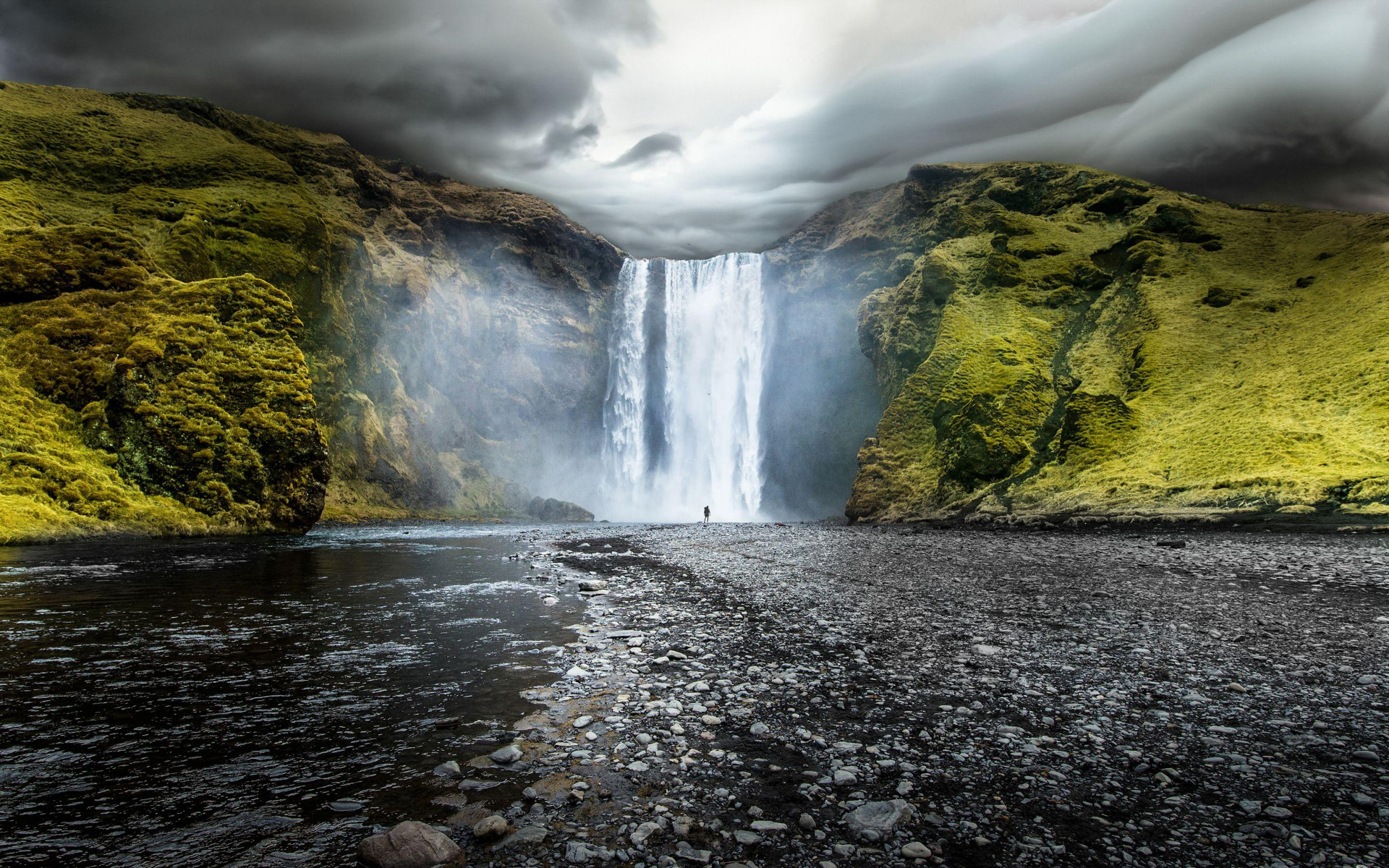
Iceland can look deceptively simple on a map.
It is an island. Reykjavík is the obvious starting point. The famous sights seem relatively close together. Rent a car, see some waterfalls, visit a geothermal pool, maybe catch the Northern Lights, and you’ve seen Iceland.
Not quite.
Iceland is one of those destinations where how you use your time matters every bit as much as how much time you have.
Waterfalls appear beside the road. Glaciers stretch toward the coast. Black sand beaches sit beneath cliffs. Geothermal areas steam from the earth. And somewhere along the way, the landscape changes again.
You don’t need to circle the entire country to experience Iceland well.
But you do need to decide what kind of Iceland experience you want.
Reykjavík Is the Beginning, Not the Whole Story
Reykjavík deserves time.
It is a compact, walkable capital with restaurants, museums, colorful streets, waterfront views and a personality very different from the landscapes beyond it.
But Reykjavík and Iceland are not interchangeable.
Some of the experiences that bring travelers to Iceland—waterfalls, glaciers, volcanic landscapes, black sand beaches and wide-open scenery—require leaving the city.
Fortunately, you don’t necessarily need to relocate every night to begin experiencing them.
The Golden Circle can be visited from Reykjavík. Parts of the South Coast can also be explored on day trips. Guided excursions make both accessible to travelers who don’t want to drive.
That makes Reykjavík a very useful base for a shorter Iceland vacation.
Just don’t spend your entire trip there and assume you’ve seen the country.
How Many Days Do You Really Need?
This is one of the first questions worth answering honestly.
A long weekend can introduce you to Reykjavík and perhaps the Golden Circle or another nearby region.
With several additional days, the possibilities expand dramatically. You can explore farther along the South Coast, spend nights outside Reykjavík, see glaciers and black sand beaches, and allow the landscape to become part of the trip rather than something viewed through a bus window between scheduled stops.
Then there is the Ring Road.
Iceland’s Route 1 circles most of the country for more than 800 miles. Driving it can be an extraordinary way to experience Iceland’s different regions.
But just because you can drive the Ring Road in seven or eight days doesn’t necessarily mean you should.
Completing the loop and experiencing the country are two different goals.
Every waterfall you decide to explore, every unexpected viewpoint, every meal, hike, weather delay and spontaneous stop takes time.
If you have a week and your primary goal is to complete the Ring Road, it can be done.
If you want a more relaxed trip, give it more time—or don’t circle the island at all.
There is no prize for covering the most miles.
The Golden Circle Is Famous for a Reason
For many first-time visitors, the Golden Circle provides an excellent introduction to Iceland.
The classic route connects Þingvellir National Park, the Geysir geothermal area and Gullfoss waterfall, along with opportunities for additional stops along the way.
In a relatively manageable day, you encounter geology, geothermal activity, history and one of Iceland’s best-known waterfalls.
It is popular because it works.
But the Golden Circle isn’t a miniature version of the entire country.
Seeing it doesn’t mean you’ve “done Iceland,” any more than skipping it means you’ve somehow missed the point.
Think of it as one chapter.
There are many more.
Don’t Underestimate the South Coast
If there is one area beyond Reykjavík that deserves serious consideration on a first trip, it is Iceland’s South Coast.
This is where many of the landscapes people imagine when they picture Iceland begin appearing one after another.
Waterfalls such as Seljalandsfoss and Skógafoss. Black sand beaches. Glaciers descending from enormous ice caps. Sea cliffs and small communities surrounded by landscapes that often don’t look quite real.
Travel farther east and the scenery continues changing toward Vatnajökull and Jökulsárlón Glacier Lagoon.
And this is where maps can become misleading.
Distances may not look enormous, but sightseeing in Iceland isn’t simply driving from Point A to Point B.
You will stop.
Frequently.
That waterfall you thought would take ten minutes may take forty-five.
The viewpoint you didn’t know existed may become your favorite photograph of the trip.
Give yourself permission to experience the route instead of racing through it.
Should You Rent a Car?
For the right traveler, renting a car in Iceland can be wonderful.
It gives you independence.
You can leave early, stay somewhere longer, change plans, stop when the landscape demands a photograph and explore places that don’t fit neatly into a scheduled excursion.
But self-driving isn’t automatically the best choice for everyone.
Icelandic driving can involve high winds, rapidly changing weather, gravel roads, one-lane bridges and conditions unfamiliar to many visitors.
Season matters enormously.
A road that is straightforward on a calm summer afternoon can be a very different experience under winter conditions.
And not every road is suitable for every vehicle.
If you’re comfortable driving and willing to monitor conditions, self-driving can provide tremendous freedom.
If you’re not, there is absolutely nothing wrong with letting someone else drive.
Guided tours can remove much of the transportation stress while adding something a rental car cannot provide:
A knowledgeable local guide.
Weather Is Part of the Trip
Iceland weather isn’t something you simply check while packing.
It can become part of the itinerary.
Conditions can change quickly, and the weather in one part of the country may be very different from what is happening somewhere else.
Wind deserves particular respect.
So does rain.
And depending on the season, snow and ice can change travel plans.
The answer isn’t worrying about the weather every day.
It is building enough flexibility into the trip that a change doesn’t ruin it.
Bring layers. Bring waterproof outerwear. Wear appropriate footwear.
And if conditions say today isn’t the day for a particular drive or activity, listen.
Iceland will still be there tomorrow.
Summer Iceland and Winter Iceland Are Different Trips
Season doesn’t simply change the temperature.
It changes the experience.
Summer brings extraordinarily long days. That additional daylight can make sightseeing feel almost limitless and provides more flexibility for travelers exploring independently.
Winter brings much shorter days, colder conditions and a completely different rhythm.
It also brings one of Iceland’s great attractions:
The Northern Lights.
But seeing them is never guaranteed.
You need darkness. You need suitable atmospheric conditions. And you need enough cooperation from the clouds to actually see the sky.
Choosing winter solely because you expect to see the Northern Lights can set the wrong expectation.
Choose winter because you want winter Iceland.
If the lights appear, consider them one of the gifts of the trip.
Iceland Is More Than the Blue Lagoon
The Blue Lagoon is probably the geothermal experience most international visitors recognize.
It is not Iceland’s only one.
Geothermal bathing is woven into Icelandic culture, from destination spas to community swimming pools and geothermal baths throughout the country.
That means travelers have choices.
You may decide the Blue Lagoon is exactly the experience you want.
You may prefer another geothermal spa.
Or you may discover that one of your favorite experiences is a much simpler local pool.
The important point is understanding that geothermal bathing isn’t merely a tourist attraction.
It is part of Iceland.
The Landscape Can Be Dangerous
One of Iceland’s greatest strengths is how accessible its landscapes can feel.
You can stand near waterfalls, walk on black sand beaches, approach geothermal areas and find yourself surprisingly close to powerful natural environments.
That accessibility can create false confidence.
Ocean waves don’t care that you’re taking a photograph.
Waterfalls create slippery surfaces.
Geothermal areas are hot enough to cause serious injury.
Weather can change quickly.
Glaciers require respect and appropriate guidance.
Barriers and warning signs are there for a reason.
Enjoy Iceland’s wildness.
Just don’t mistake accessibility for safety.
Iceland Can Be Expensive
This shouldn’t come as a surprise after you arrive.
Food, lodging, rental vehicles, fuel, excursions and other travel expenses can make Iceland a relatively expensive destination.
That doesn’t mean you need to avoid it.
It means the budget should be realistic from the beginning.
A traveler who spends more on a well-located hotel may save transportation time.
Someone renting a vehicle needs to consider more than the daily rental price.
Tours and activities can add significantly to the cost—but may also provide access to experiences you couldn’t safely or practically arrange yourself.
As with Alaska, value isn’t simply about finding the lowest price.
It is about spending money on the parts of the experience that matter to you.
Some Experiences Need a Guide
Independence is wonderful.
There are also times when expertise matters.
Glacier walks, ice caves and certain backcountry experiences aren’t places to improvise because you watched a video online.
Conditions change.
The environment changes.
A qualified guide provides equipment, local knowledge and an understanding of risks that a visitor simply doesn’t have.
Knowing when not to do something independently is part of traveling well.
You Don’t Have to See Everything
This may be the most important thing to understand about planning Iceland.
The Golden Circle.
The South Coast.
Snæfellsnes Peninsula.
The Ring Road.
North Iceland.
Eastfjords.
Westfjords.
Highlands.
Glaciers.
Waterfalls.
Volcanoes.
Geothermal areas.
Northern Lights.
It doesn’t all have to fit into one vacation.
Trying to turn Iceland into a checklist can work against the very thing that makes the country remarkable.
Sometimes the best moment isn’t the attraction you planned six months earlier.
It’s pulling over safely because the light has changed across a mountain.
It’s realizing you’ve been staring at a waterfall for twenty minutes.
It’s soaking in warm geothermal water while the air around you is cold.
It’s looking across a landscape and wondering how something can feel so empty and so dramatic at the same time.
Leave room for Iceland to surprise you.
Before You Start Building the Itinerary
Start with a few questions.
What season do you want to experience?
How many days do you actually have?
Are you comfortable driving?
Do you want to stay primarily in Reykjavík or move through the country?
Is seeing the Northern Lights important?
Are glaciers, waterfalls, geothermal experiences, hiking, photography or simply the landscapes themselves your priority?
Do you want independence—or would you rather have someone else handle the driving and logistics?
Those answers matter more than somebody else’s list of the “10 things you can’t miss.”
Because Iceland doesn’t need to be experienced the same way by everyone.
Find Your Iceland
Maybe Iceland is a long weekend in Reykjavík with the Golden Circle and a geothermal soak.
Maybe it’s several days exploring the South Coast.
Maybe it’s a carefully paced journey around the Ring Road.
Maybe it’s winter darkness and the possibility of seeing the sky turn green.
Or maybe it’s a road, a waterfall you hadn’t planned to visit, and a landscape that makes you pull over simply because you need another minute to look at it.
You don’t need to see all of Iceland.
You need enough time to experience your Iceland well.
Start there.
Then let the island do the rest.