
Glacier National Park looks fairly straightforward on a map.
Mountains. Lakes. A spectacular road crossing the park. Pick a place to stay, spend a few days exploring, and you’re all set.
Then you begin actually planning the trip.
Going-to-the-Sun Road. Lake McDonald. Logan Pass. Many Glacier. Two Medicine. North Fork. East side. West side. Separate entrances. Seasonal roads.
Suddenly Glacier begins to make a little less sense.
The good news is that Glacier isn’t particularly difficult to visit.
But it rewards travelers who plan early and understand the geography before they start making reservations.
You don’t necessarily have to choose one side of Glacier.
You need to understand how the different pieces fit together.
Glacier Isn’t One Continuous Driving Loop
This may be the most important thing for a first-time visitor to understand.
Glacier is made up of several distinct areas, and they aren’t all connected internally by roads.
Going-to-the-Sun Road crosses the heart of the park between the West Glacier and St. Mary areas when the entire road is open.
But Many Glacier is reached through a separate entrance.
So is Two Medicine.
The North Fork is another distinct area reached from the west.
That means looking at Glacier as one large park and choosing one centrally located hotel doesn’t necessarily produce the most efficient trip.
There really isn’t one location that is equally convenient to everything.
Before choosing where to sleep, decide which parts of Glacier you actually want to experience.
Then let the geography help build the trip.
Plan Early
There are destinations where you can decide to visit, reserve a room and figure out the details later.
Glacier isn’t one I’d approach that way.
Lodging is limited compared with demand. Popular campgrounds, tours and activities can require advance planning. Access procedures can change from season to season.
And perhaps most importantly, the park itself is highly seasonal.
Planning early gives you choices.
Waiting can mean allowing whatever lodging and availability remain to dictate the itinerary for you.
That doesn’t mean you need every hour scheduled months in advance.
Quite the opposite.
Plan the important pieces early enough that you still have room to be flexible once you arrive.
Going-to-the-Sun Road Changes Everything
Going-to-the-Sun Road is one of America’s great scenic drives.
It crosses the Continental Divide at Logan Pass and connects the west and east sides of Glacier through some extraordinary mountain scenery.
For many visitors, driving it becomes one of the defining experiences of the trip.
Going-to-the-Sun Road also has vehicle size restrictions, something travelers using larger vehicles or RVs should consider when planning their route.
But there is something extremely important to understand before building an itinerary around it:
The entire road is not open year-round.
Opening the alpine section requires an enormous snow-removal effort each spring, and the date when vehicles can travel the entire road depends on snowpack, avalanches and weather.
There is no calendar date you should simply assume will be safe.
If you’re visiting before the road has fully opened, you cannot drive straight across the park over Logan Pass.
And that changes the trip considerably.
A Closed Going-to-the-Sun Road Isn’t a Small Inconvenience
Look at the map again.
If Going-to-the-Sun Road isn’t open across the Continental Divide, traveling between the east and west sides means routing around the park rather than through it.
That’s a very different drive.
This doesn’t mean you shouldn’t visit Glacier before the entire road opens.
Spring and early summer can offer their own experiences.
It means you need to plan the trip that actually exists during your dates—not the summertime version of Glacier you saw on somebody else’s itinerary.
Before finalizing lodging on opposite sides of the park, understand how you will travel between them.
And as the trip approaches, check current road conditions rather than relying on what happened the previous year.
Nature decides when that road opens.
Not the reservation you made six months earlier.
Don’t Choose Lodging Simply Because It’s “Inside the Park”
Staying inside a national park sounds automatically better.
Sometimes it is.
Being close to the places you want to explore can reduce driving and provide an atmosphere that’s difficult to reproduce outside the park.
But in Glacier, inside versus outside isn’t the most useful question.
Ask instead:
Where should I stay for what I’m doing next?
If tomorrow’s plans are centered around an area reached through a separate entrance, lodging outside the main park corridor may put you in a better position than a more expensive room somewhere technically inside the park.
Paying a premium for park lodging doesn’t provide much benefit if you begin the next morning by driving out of that area to reach the entrance you actually need.
Location matters more than the words inside the park on the reservation.
Moving Lodging Can Make the Trip Easier
Packing a suitcase and changing hotels during a vacation sounds inconvenient.
So does spending several hours retracing the same roads.
For a multi-area Glacier trip, moving lodging once or twice can make excellent sense.
You might spend part of the trip positioned for Going-to-the-Sun Road and the western portion of the park, then relocate when your plans shift toward another area.
That isn’t unnecessary hotel hopping.
It’s using lodging as part of the itinerary.
You don’t need to change rooms every night.
But don’t dismiss a split stay simply because staying in one place looks easier on paper.
Sometimes the easiest trip involves moving.
Many Glacier Is Worth Understanding
Many Glacier is one of Glacier National Park’s distinct areas, accessed separately from Going-to-the-Sun Road.
And that geographic detail matters.
You don’t simply continue along the main park road until you arrive there.
Many Glacier is known for dramatic mountain scenery, alpine lakes, wildlife opportunities and access to some of the park’s celebrated hiking.
For hikers, it can easily become a major part of the Glacier experience.
For travelers who aren’t interested in strenuous hiking, the scenery alone can still make the area worthwhile.
The important planning lesson isn’t that everyone must visit Many Glacier.
It’s that if you want to visit it, build the route and lodging around that decision rather than trying to squeeze it into whatever itinerary you’ve already created.
Don’t Forget Two Medicine
Two Medicine can receive less attention from first-time visitors than Going-to-the-Sun Road or Many Glacier.
That doesn’t make it an afterthought.
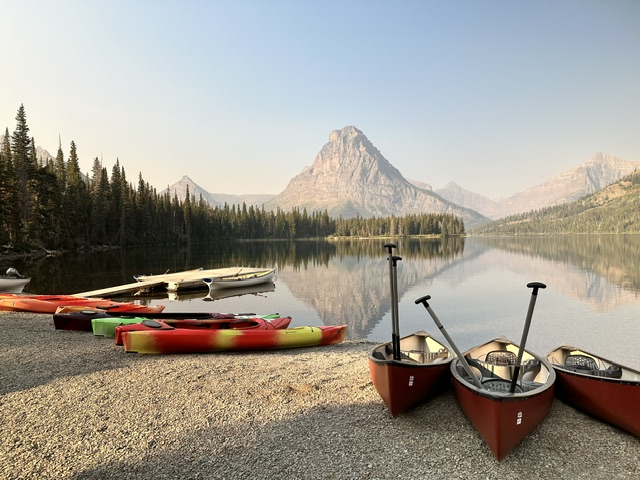
Like Many Glacier, Two Medicine is reached through its own entrance rather than from the Going-to-the-Sun Road corridor.
The area offers lakes, mountain scenery, hiking and a different perspective on Glacier.
And because it requires deliberate routing, it’s another good example of why understanding Glacier’s geography matters before booking accommodations.
You don’t need to visit Two Medicine simply because it’s there.
But you should know it’s there before deciding what your version of Glacier should include.
The North Fork Is Another Glacier Entirely
On the western side of the park, the North Fork offers another very different experience.
This is a more remote area with fewer services and rougher roads. Places such as Bowman and Kintla Lakes appeal to travelers looking for a quieter and more self-reliant Glacier experience.
It isn’t something every first-time visitor needs to add.
And that’s an important point.
Learning that Glacier has several distinct areas doesn’t mean you now need to visit all of them.
It means you have choices.
A good itinerary isn’t the one that touches every corner of the map.
It’s the one that spends enough time in the places that matter to you.
Logan Pass Is Spectacular — and Popular
When Going-to-the-Sun Road is fully open, Logan Pass becomes one of the park’s most sought-after destinations.
There’s a reason.
You’re high in the mountains, surrounded by enormous scenery, with access to some of Glacier’s best-known trails.
You’re also not the only person who wants to be there.
Parking and congestion can become significant issues during busy periods, and Glacier has adjusted transportation and visitor-access strategies over the years to manage demand.
Don’t build a Glacier trip around the assumption that you can arrive anywhere at any time and simply find a parking space.
Check the current access and transportation options for the year you’re visiting.
Sometimes the smartest way to reach a popular place isn’t necessarily driving your own vehicle directly to it.
Glacier Is a Wonderful Place to Hike — Even If You Aren’t a Serious Hiker
Glacier has extraordinary hiking.
But you don’t need to be a backcountry adventurer to enjoy the park.
Trails range from relatively approachable walks to strenuous mountain routes requiring significant preparation.
Scenic drives, lakes, boat experiences, overlooks and shorter trails make Glacier accessible to travelers with very different interests and physical abilities.
Be realistic about yours.
A trail that looks short on paper can feel very different once elevation gain and altitude enter the equation.
Choose experiences that fit the traveler you actually are—not the traveler somebody on social media convinced you that you should be.
There is no prize for completing the hardest trail.
Wildlife Doesn’t Need Your Help Getting Closer
Glacier is home to bears, mountain goats, bighorn sheep, moose, deer and other wildlife.
Seeing them can become one of the great memories of the trip.
But the same principle that applies in Yellowstone applies here:
Wildlife is wild.
Give animals space.
Know appropriate bear-safety practices before hiking.
Carry bear spray where recommended and understand how to use it.
Keep food properly stored.
And never approach an animal because the photograph would be better from ten feet closer.
If an animal changes its behavior because of your presence, you’re already affecting the encounter.
Distance doesn’t diminish a wildlife experience.
It respects it.
Weather and Elevation Matter
A beautiful summer morning near a lake doesn’t tell you what conditions will be like later at Logan Pass.
Glacier contains significant changes in elevation, and mountain weather can change rapidly.
Temperatures can vary dramatically during the same day.
Rain happens.
Wind happens.
And snow can linger in high-elevation areas well after lower elevations feel like summer.
Layers matter.
So does appropriate footwear.
And if your plans include hiking, check current trail conditions rather than assuming that because the calendar says summer, every trail is ready for summer visitors.
In Glacier, the mountain gets a vote.
Don’t Build the Entire Trip Around One Famous Road
Going-to-the-Sun Road deserves its reputation.
Drive it if conditions and your itinerary allow.
Stop.
Look around.
Give it time.
But don’t let the famous road convince you that everything else in Glacier is secondary.
Many Glacier isn’t simply an extension of Going-to-the-Sun Road.
Neither is Two Medicine.
Neither is the North Fork.
The road provides access to an extraordinary portion of Glacier.
It doesn’t define the entire park.
Understanding that distinction can turn a scenic drive through Glacier into a much richer Glacier vacation.
How Many Days Do You Need?
As with every great national park, the answer depends on what you want to do.
A traveler primarily interested in Going-to-the-Sun Road and several major viewpoints will need less time than someone planning substantial hiking and visits to multiple areas.
If you want to experience both sides of the park, visit separate areas such as Many Glacier or Two Medicine, and allow time for hiking or wildlife viewing, additional days become valuable quickly.
Don’t count only nights.
Look at full usable days.
Arrival and relocation days may not provide the same amount of exploration time as a day when you wake up exactly where you want to be.
And don’t turn additional days into permission to add more destinations endlessly.
Sometimes another day is valuable because it allows you to do less.
Reservations and Access Rules Can Change
Glacier has experimented with different visitor-access systems in recent years to manage congestion in popular areas.
What was required for someone else’s vacation may not be what is required for yours.
That’s why an evergreen Glacier guide shouldn’t tell you that a particular reservation will always be required at a particular entrance.
Instead:
Check the current National Park Service requirements for your travel dates.
Do it while planning.
Then check again as the trip gets closer.
The same applies to road openings, shuttle operations, trail conditions and seasonal services.
Good planning doesn’t mean memorizing last year’s rules.
It means knowing where to find this year’s information.
Don’t Try to Collect Glacier
Lake McDonald.
Logan Pass.
Many Glacier.
Two Medicine.
North Fork.
Waterfalls.
Mountain lakes.
Wildlife.
Hikes.
Boat rides.
Going-to-the-Sun Road.
It is easy to turn Glacier into another list.
Resist that.
Maybe you don’t make it to North Fork.
Maybe weather changes a hiking day.
Maybe Going-to-the-Sun Road isn’t fully open during your visit.
Maybe you discover that one lake, one trail or one mountain view deserves far more time than you planned.
That’s okay.
A successful Glacier vacation isn’t measured by the percentage of the park map you managed to cover.
Before You Start Booking
Start with the calendar.
When are you going?
Then look at the map.
Which areas interest you most?
Will Going-to-the-Sun Road likely be fully accessible during your travel period—or do you need to plan for the possibility that it won’t be?
Where should you stay for the experiences you want?
Would moving lodging once make the itinerary more efficient?
Do Many Glacier or Two Medicine belong in your trip?
Are you primarily interested in hiking, scenery, wildlife, photography—or simply experiencing one of America’s great mountain landscapes?
And what reservations or access requirements apply for the year you’re actually traveling?
Answer those questions before you start choosing rooms based solely on price.
Glacier becomes much easier to plan once you understand how the pieces connect.
Find Your Glacier
Maybe Glacier is driving Going-to-the-Sun Road with the mountains rising around you.
Maybe it’s an early morning beside Lake McDonald.
Maybe it’s a trail in Many Glacier.
Maybe it’s the quieter landscape of Two Medicine.
Maybe it’s seeing wildlife from a respectful distance.
Or maybe it’s simply sitting beside a mountain lake long enough to realize that the next thing on the itinerary can wait.
You don’t need to choose one side of Glacier.
You don’t need to see every part of it either.
Plan early enough to give yourself choices.
Understand the geography.
Stay where it makes sense.
Then give Glacier enough room to become more than a collection of places you drove past.
That’s how you experience the park—not simply visit it.