
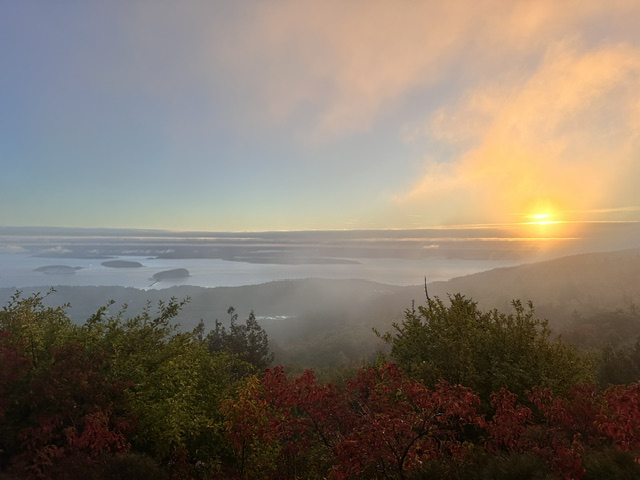
Maine’s rocky coastline, working harbors, lighthouses, small towns, and dramatic ocean scenery make it a wonderful destination for travelers who enjoy exploring. Acadia National Park is certainly one of the state’s best-known attractions, but the journey along the coast can be every bit as rewarding as the park itself.
During our visit, we flew into Bangor, picked up our rental car, and drove approximately two hours south to Portland Head Light before gradually working our way north along the coast toward Acadia National Park.
Along the way, we discovered places we would gladly revisit, encountered a few unexpected challenges, and learned practical lessons worth sharing.
Our goal isn’t to tell you exactly how to plan your vacation. It’s to help you recognize opportunities and considerations that might make your own visit more enjoyable.
Start With the Bigger Picture
One of the first decisions to make is whether you’re planning a trip primarily to Acadia National Park or a broader exploration of coastal Maine.
Those are two different experiences, and both can be worthwhile.
If your primary interests are hiking, cycling, photography, or spending extended time outdoors, you may want several days within Acadia. If you enjoy scenic drives, coastal communities, lighthouses, and discovering places along the way, consider reserving a meaningful portion of your itinerary for the journey to and from the park.
For our style of travel, approximately two days exploring Acadia provided a satisfying introduction. Someone planning extensive hiking or other outdoor activities could easily want more time.
The important thing is to decide what kind of experience you’re looking for before allocating all your available days.
Exploring the Coast Before Acadia
Portland Head Light
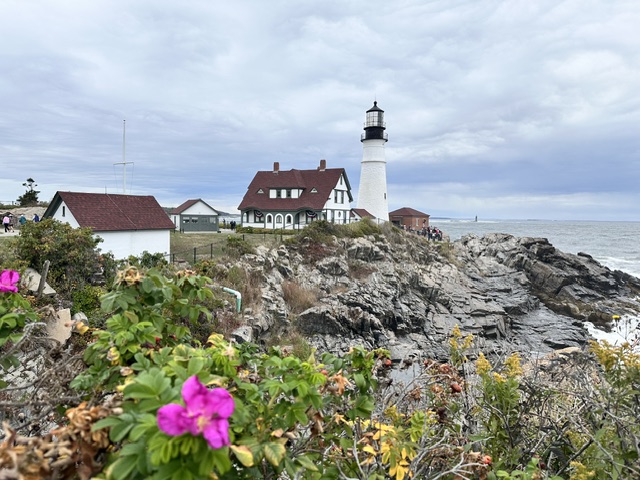
Portland Head Light is a natural place to begin a coastal Maine adventure, particularly if your travels take you through the Portland area.
The lighthouse stands above a dramatic stretch of rocky shoreline at Fort Williams Park in Cape Elizabeth. Even visitors who aren’t particularly interested in lighthouses can appreciate the ocean views and surrounding scenery.
It’s worth allowing enough time to enjoy the grounds rather than treating the lighthouse as a quick photograph.
As with many popular coastal attractions, weather and seasonal crowds can influence the experience.
Boothbay Harbor
Boothbay Harbor was one of the places we wished we could have explored more thoroughly.
Heavy rain accompanied our visit, so we drove through the community and enjoyed what we could from the vehicle. We weren’t able to spend time walking the waterfront or crossing the pedestrian footbridge.
Even under those conditions, it was easy to see why visitors enjoy the area.
If your schedule allows, consider giving Boothbay Harbor a few hours rather than simply passing through. Its waterfront, shops, harbor views, and walkable areas offer an opportunity to slow down and enjoy the coastal atmosphere.
Our experience also reinforced an important planning lesson: weather can change how much time you need at a destination. Keeping some flexibility in your itinerary can make a considerable difference.
Ocean Point and Grimes Cove
Not every memorable coastal stop needs to be a major attraction.
The Ocean Point area near East Boothbay, including Grimes Cove, offers beautiful rocky shoreline scenery and an opportunity to experience a quieter side of the coast.
Places like this are among the reasons we encourage travelers to look beyond the best-known stops. A scenic detour may become one of your favorite memories.
Check public access and parking information before visiting, and exercise caution around wet rocks and heavy surf.
Rockland Breakwater Lighthouse
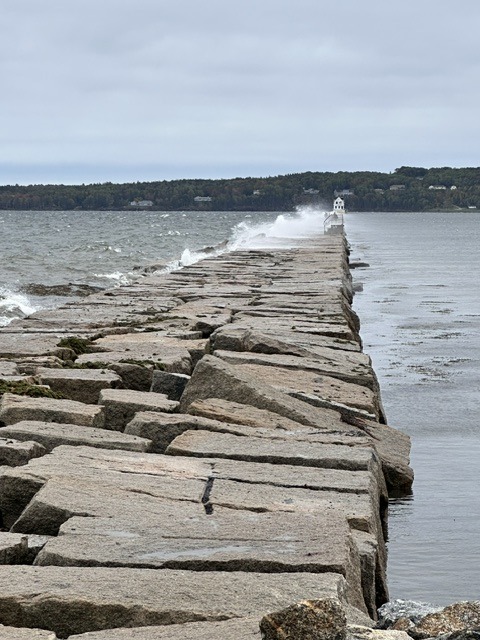
Rockland’s breakwater is an attraction where knowing what to expect can significantly influence your decision to visit.
The lighthouse sits at the far end of a long granite breakwater extending into the harbor. Reaching it involves walking over large stone blocks rather than following a conventional paved pathway.
We reached the beginning of the breakwater, but heavy surf made continuing an unattractive proposition. We watched some adventurous visitors venture farther out and get thoroughly soaked by the waves.
Under calmer conditions, we would have enjoyed making the walk.
However, this is not an outing everyone will find comfortable or suitable.
The surface can be uneven, with gaps between stones, and conditions become more challenging when the rocks are wet. The route is exposed to wind and waves, with no conventional handrails along the walk.
Navigator Tip
Before making the breakwater walk part of your plans, consider the weather, surf conditions, footwear, and mobility needs of everyone in your group. Seeing the lighthouse from shore and walking all the way to it are very different experiences.
Rockport and Camden
Rockport and Camden are additional reasons not to rush north toward Acadia.
Both communities offer coastal scenery and opportunities to explore beyond the national park. Camden, in particular, is a worthwhile stop for travelers who enjoy attractive harbors and scenic overlooks.
One of our favorite discoveries in the area was Mount Battie.
Mount Battie: A View Worth Seeking Out
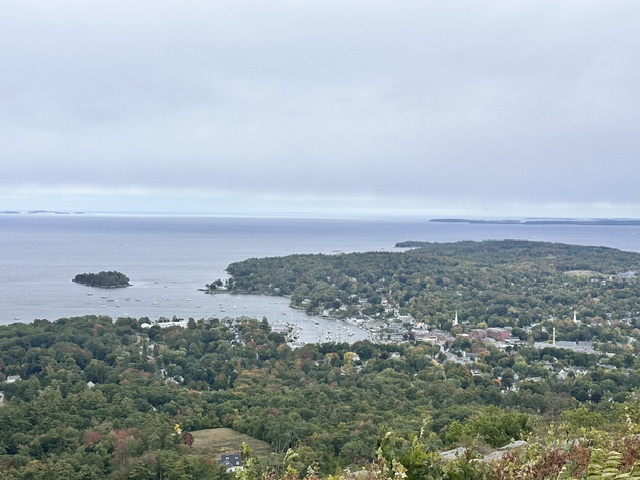
Mount Battie, within Camden Hills State Park, offers sweeping views of Camden Harbor, the surrounding coastline, and offshore islands when visibility cooperates.
For travelers who prefer scenic driving over strenuous hiking, the possibility of reaching an elevated overlook by vehicle makes this an especially appealing stop.
We found the view well worth the detour.
Navigator Tip
Scenic overlooks are particularly dependent on weather and visibility. Before visiting, check current park access and conditions. A little flexibility may reward you with a considerably better view.
Bar Harbor: Gateway to Acadia
Bar Harbor is a lively coastal community and a popular base for exploring Acadia National Park.
Its downtown offers restaurants, shops, waterfront scenery, and convenient access to the surrounding area. For many travelers, staying in or near Bar Harbor makes exploring the park straightforward.
However, Bar Harbor is only one part of coastal Maine.
If you’re planning a longer trip, consider whether you would also enjoy spending time in some of the smaller coastal communities farther south.
An Often-Overlooked Planning Consideration: Cruise Ship Visits
Bar Harbor is also a port of call for cruise ships during portions of the season.
That doesn’t change the attractions available to visitors, but it can affect the number of people exploring a relatively compact downtown area on a particular day.
Cruise passengers may also visit Acadia and use local transportation services.
We hadn’t considered the cruise ship calendar when planning our own visit. Looking back, it’s something we would investigate if returning during the busy fall season.
If your itinerary is flexible, comparing the local cruise ship schedule with your planned visit may help you choose a day that better suits your preferences.
A day without a scheduled ship is not a guarantee of smaller crowds, particularly during popular foliage periods.
Navigator Tip
When researching a destination that welcomes cruise ships, check the port schedule. It’s a useful planning consideration even when you aren’t taking a cruise yourself.
Acadia National Park: What We Learned
Acadia’s combination of mountains, rocky coastline, forests, ponds, and ocean views makes it a remarkable place to explore.
But enjoying the park involves more than choosing which attractions to see. Understanding its roads, parking, reservations, and walking conditions can have a substantial effect on your day.
Start Early When Possible
One of our most useful observations was the advantage of arriving early.
Popular parking areas can fill as the day progresses. Visitors arriving around midday may find fewer convenient parking opportunities than those who begin exploring in the morning.
Park Loop Road: Understand the One-Way Sections
One detail that deserves attention is the configuration of Park Loop Road.
Much of the scenic roadway operates as a one-way route.
That means passing a full parking area isn’t always as simple as turning around and trying again. Depending on your location, returning to a particular stop may involve a lengthy drive.
We also observed vehicles parked along portions of the roadway where roadside parking was permitted. Signs indicated areas where parking was prohibited.
Don’t assume every roadside location is available for parking. Follow posted restrictions, watch for other vehicles, and take particular care when entering or exiting your car.
Navigator Tip
Before starting the Park Loop Road drive, identify the stops that matter most to you. Understanding the route and parking arrangements can help avoid unnecessary backtracking.
Park Entrance Passes and Cadillac Mountain Reservations
Having a national park pass doesn’t necessarily mean there are no additional steps to complete when entering Acadia.
During our visit, we already held a national park pass, but we were also directed to obtain a separate Acadia vehicle display pass for the windshield.
That wasn’t something we had anticipated.
Cadillac Summit Road has its own timed vehicle reservation requirements during designated periods, separate from park admission.
We also experienced how difficult it can be to obtain a reservation when cellular service is unreliable. At one point, we lost service shortly before a reservation release and had to continue driving until we found a usable signal.
We were fortunate to secure a reservation.
Navigator Tip
Before departure, investigate three separate questions: What park admission documentation will you need? Does your planned Cadillac Mountain visit require a vehicle reservation? And will you be able to access your reservation confirmation without dependable cellular service?
Save relevant confirmations in advance rather than assuming you’ll have an internet connection when you need one.
Cadillac Mountain
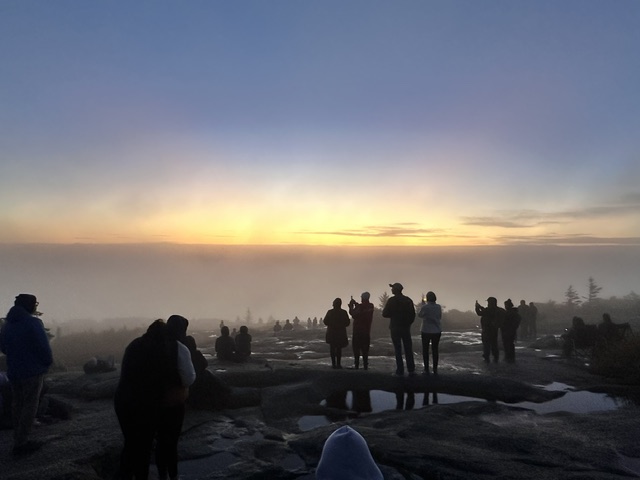
Cadillac Mountain is among Acadia’s signature experiences, particularly for its expansive views and popular sunrise opportunities.
Its popularity also makes advance planning important.
If a Cadillac Mountain visit is a priority, research the current reservation process well before your trip. Pay attention to when reservations become available and whether additional reservations are released closer to the visit date.
Weather is another important factor. Cloud cover, fog, wind, and rain can change the experience considerably.
And remember that a sunrise reservation involves more than reaching the entrance at sunrise. You’ll need to account for driving time, parking, and getting situated before the sun appears.
What If You Can’t Secure a Reservation?
An unsuccessful attempt to obtain a vehicle reservation doesn’t necessarily mean you must eliminate Cadillac Mountain from your plans.
Local transportation providers may offer paid trips to the summit, including sunrise or daytime visits, without passengers needing to obtain their own private vehicle reservations.
These services may have limited availability and their own schedules, prices, and pickup arrangements.
Navigator Tip
If Cadillac Mountain is important to you and private vehicle reservations are unavailable, investigate local transportation providers. Compare their services and confirm the arrangements that apply to your travel dates before deciding to skip the experience.
Bass Harbor Head Lighthouse
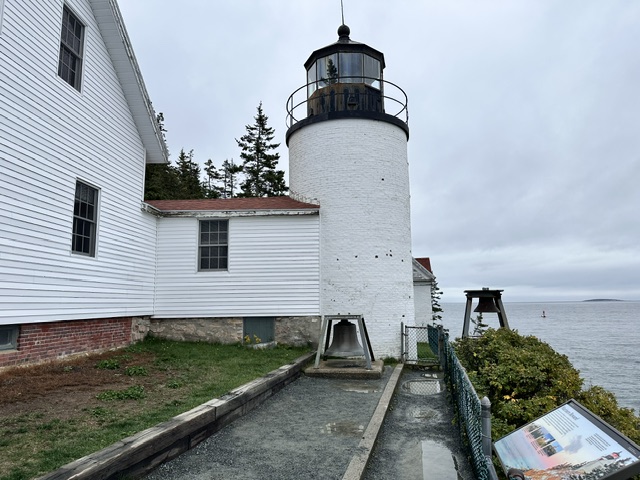
Bass Harbor Head Lighthouse is one of Acadia’s most recognizable landmarks, but visiting it taught us an important distinction.
Seeing the lighthouse and capturing the famous photograph of it are not necessarily the same experience.
The parking area is relatively small, and traffic can build considerably during popular visiting periods.
On our first attempt, we encountered a substantial line of vehicles and decided not to wait. Rather than spend an undetermined amount of time in traffic, we continued with our day.
We returned the following day and waited for the opportunity to visit.
During our visit, we did not see a ranger directing traffic at the parking area.
There are different vantage points around the lighthouse. The classic image of the structure above the rocky shoreline generally requires negotiating uneven coastal rocks.
We explored as far as felt safe but did not reach the position needed for that particular photograph.
That’s an important consideration for anyone with balance or mobility concerns.
Navigator Tip
Decide whether your goal is simply to see Bass Harbor Head Lighthouse or to reach a specific photographic vantage point. Research the terrain, parking situation, and expected conditions before visiting. Never let the pursuit of a photograph outweigh your safety.
Thunder Hole and Ocean Path
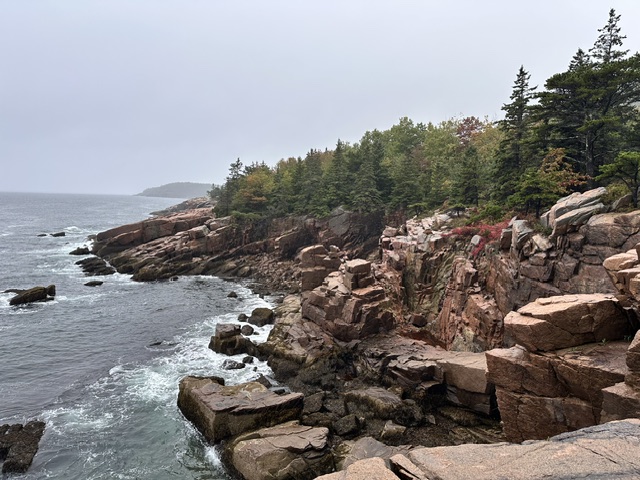
Thunder Hole is one of the places where ocean conditions can dramatically influence what visitors experience.
During our visit, heavy surf created impressive coastal scenery. The sound and movement of the ocean were part of what made the experience memorable.
However, dramatic surf also calls for caution. Waves can be unpredictable, and exposed rocks or viewing areas may become hazardous.
Ocean Path provides opportunities to enjoy additional coastal scenery, but walking conditions deserve consideration.
Following the heavy rain during our trip, portions of the path had standing water and puddles. Those were conditions associated with the weather we encountered, not necessarily what every visitor should expect.
Navigator Tip
Research tide and surf conditions if Thunder Hole is a priority, but don’t assume the most dramatic conditions are the safest. Wear appropriate footwear and be prepared to adjust your plans.
Jordan Pond: Scenery, Access, and Famous Popovers
Jordan Pond is another popular Acadia destination, known for its scenery and Jordan Pond House.
It’s also a good example of why visitors should investigate the details of an attraction rather than assuming that reaching the parking area means every part of the experience will be easy to access.
Reaching the Water and Exploring the Grounds
We were able to enjoy views of Jordan Pond from the lawn and upper areas near Jordan Pond House.
However, the route we encountered leading down toward the shoreline included steps. We did not locate a step-free route to the water during our visit.
We also encountered changes in elevation around the visitor facilities and noticed raised metal edging along portions of the paved walking surfaces that could present a tripping concern.
These were observations from the areas we personally explored, not a comprehensive assessment of every accessible route.
That doesn’t mean no alternative exists. It means visitors who require step-free access should investigate the specific route they intend to use.
For example, reaching the restaurant, accessing the grounds, and reaching the pond’s shoreline may involve different routes and considerations.
Jordan Pond House and Its Famous Popovers
Jordan Pond House is well known for its popovers, and we discovered that visitors had more than one way to enjoy them.
During our visit, a limited number of dining reservations were available, visitors without reservations could wait for a table, and there was a separate walk-up opportunity for those who primarily wanted popovers.
If reservations appear unavailable for your travel dates, don’t automatically assume you’ve exhausted every possibility.
Navigator Tip
Check directly with Jordan Pond House well in advance of your visit to learn which dining and popover options are currently offered. Restaurant procedures and availability may change.
Accessibility: Look Beyond the Parking Space
Accessibility was one of the areas where our visit raised the most practical planning questions.
We encountered several situations where getting to a facility was possible, but reaching a particular viewpoint, pathway, or part of the attraction involved additional challenges.
Accessibility is not a single yes-or-no question.
Someone using a wheelchair may have different needs from someone using a cane, walker, or mobility scooter. Even visitors who can manage short walks may struggle with stairs, uneven stones, steep grades, or wet surfaces.
Hulls Cove Visitor Center
At Hulls Cove Visitor Center, the main lower parking area leads to a substantial staircase, approximately 52 steps, to reach the visitor center.
We followed the Visitor Center sign into that lower parking area. Only afterward did we learn that accessible parking was available behind the building, with an elevator providing access to the main level.
Staff explained the alternate approach, but it was information we would have appreciated before arriving.
Navigator Tip
If stairs present a challenge, research the accessible parking entrance at Hulls Cove Visitor Center before following the usual route into the lower lot.
Don’t Forget Your Accessible Parking Placard
One easily overlooked consideration applies to travelers who fly to a destination and rent a vehicle.
If you normally use an accessible parking placard, remember to bring the valid placard and any required documentation with you, and check the rules that apply to its use in your destination.
Leaving it in your vehicle at home could complicate parking throughout your trip.
Navigator Tip
Accessible parking is only the beginning. Research what lies between the parking space and the experience you actually want to have.
Weather: Leave Room for the Unexpected
Our coastal Maine visit coincided with a period of substantial rain and heavy surf.
The weather prevented us from exploring some places as thoroughly as we would have liked. We missed opportunities to walk Boothbay Harbor’s waterfront and to continue along Rockland’s breakwater.
At the same time, the rough ocean created dramatic scenery around Acadia.
The trip wasn’t ruined by the weather. It simply became a different experience from the one we had originally imagined.
That is one reason we favor itineraries with some flexibility.
When possible, avoid arranging every day so tightly that a single rainy afternoon disrupts the remainder of your plans.
Have alternative activities in mind, and recognize that some outdoor experiences are worth postponing when conditions aren’t favorable.
A Few Small Discoveries Along the Way
Not every travel recommendation needs to involve a famous landmark.
Try Maine Blueberry Soda
Maine is famous for its wild blueberries, and one of our simple recommendations is to try a blueberry soda while visiting the area.
We thoroughly enjoyed it, and apparently we weren’t alone.
While waiting in line for dinner in Ellsworth, we met a couple from Iowa who had purchased an entire case to take home!
It’s a small regional experience, but those are often the things that make a trip memorable.
Keep an Eye Out for Unexpected Stops
While passing through Freeport, we spotted the famous L.L.Bean Bootmobile near the company’s headquarters.
We didn’t stop for a photograph, and it’s one of those little opportunities we wish we’d taken.
It’s a reminder that travel isn’t always about the places on your original itinerary. Sometimes the unexpected discoveries are worth a few minutes of your time.
What We’d Do Differently
Every trip teaches us something, and this one was no exception.
If we were planning the same journey again, we’d allow more time to explore Boothbay Harbor on foot, particularly its waterfront and pedestrian bridge.
We’d welcome another opportunity to walk the Rockland Breakwater under calmer conditions.
We’d also consider the cruise ship schedule when choosing which days to spend in Bar Harbor and Acadia, particularly if we planned to rely on local transportation.
And we’d pay closer attention to the precise walking routes and accessibility arrangements at attractions where those details could influence the experience.
None of those lessons means we planned a bad trip. They simply reflect the benefit of having experienced the destination firsthand.
That’s part of what makes travel rewarding: you return with a better understanding of the places you’ve visited.
Planning Your Own Coastal Maine Adventure
Before building your itinerary, consider a few questions.
- Are you visiting primarily for Acadia, or do you also want to explore the coast?
- Do you prefer hiking and outdoor activities, scenic drives, or wandering through coastal communities?
- How much time do you want to spend at each stop rather than simply moving between them?
- Will anyone in your group need accessible parking, step-free routes, or shorter walking distances?
- Have you investigated the reservations, transportation options, and seasonal operating schedules that apply to your travel dates?
- How much flexibility can you leave for changing weather?
You don’t need every answer before you begin planning. But knowing which questions to investigate can help you make better decisions.
A Note About Current Information
This guide reflects our firsthand experiences exploring Coastal Maine and Acadia. Operating hours, reservation procedures, park regulations, transportation schedules, access arrangements, and other conditions may change.
We encourage travelers to confirm the details relevant to their own visit directly with the appropriate parks, businesses, and transportation providers.
Our purpose is to share what we learned and help you recognize what deserves attention as you plan.
Final Thoughts
Acadia National Park deserves its reputation as one of Maine’s outstanding destinations. Its combination of mountains, ocean, forests, and rocky shoreline offers experiences that are difficult to duplicate elsewhere.
But the towns, harbors, lighthouses, scenic overlooks, and unexpected discoveries along the coast deserve attention too.
You don’t have to visit every attraction or follow someone else’s perfect itinerary to have a memorable trip.
Take the time to understand your options, leave room for discovery, and plan around the experiences that matter most to you.
Acadia may be what brings you to Maine, but don’t let it be all you see.
Information is everywhere. Guidance is rare.
Southern Navigator Travel • Find Your Direction